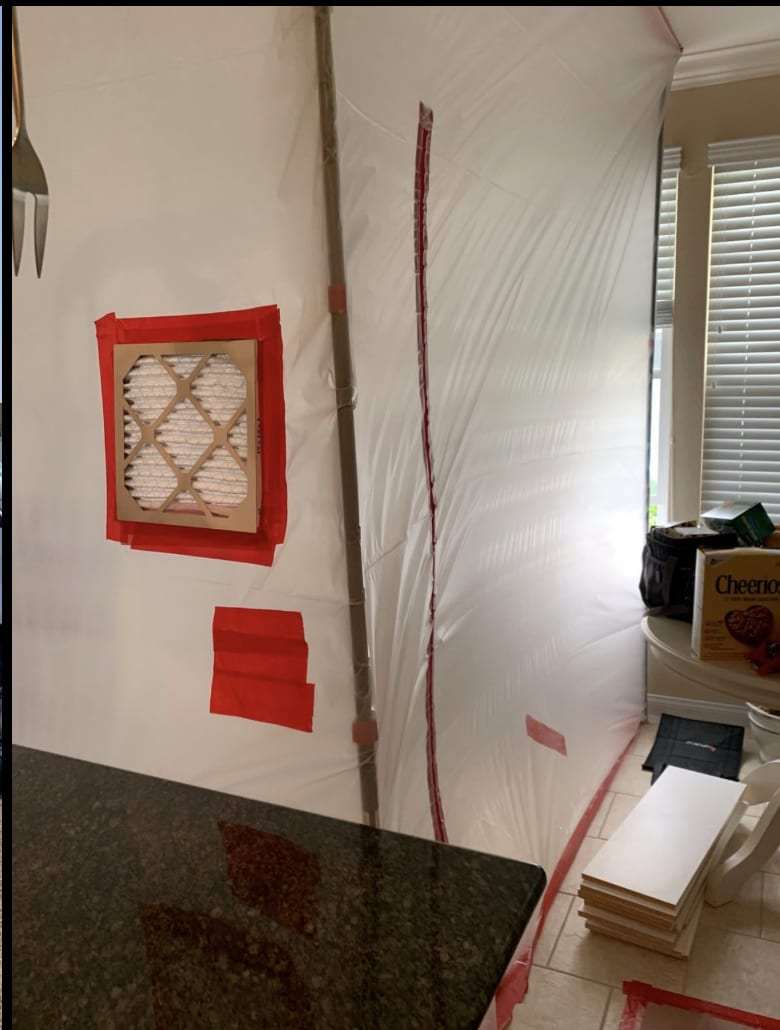
Plastic containment wall with a filter port for negative air. Example of the work involved; the photo does not show a specific property or a job for this site.
What makes an addition different
An addition is often built to a different standard than the original house, and its crawl space may have less ventilation, exposed soil or ductwork running through it. Moisture from the ground evaporates into the space, and with little air exchange it humidifies the framing and insulation, which then smell earthy.
That smell travels. Air leaks upward through gaps around pipes, ducts and wiring, and a return duct in the crawl space can pull the smell into the whole house. Because the room above looks fine, the owner often blames the carpet, and the problem continues.
The questions to ask are whether the soil is covered, whether ducts and insulation are dry, and whether water enters the space after storms.
A habit of checking the space twice a year, once in spring and once in autumn, catches problems early. A flashlight, a hygrometer and a few minutes are all that is needed.
Take photos from the same spot each time so changes are easy to compare.
What to look for inside
| Observation | Possible meaning | Next step |
|---|---|---|
| Bare soil with no cover | Ground moisture evaporates into the space | Ask a qualified contractor about a ground cover |
| Damp or sagging insulation | Moisture is reaching the floor system | Find the source before replacing material |
| Visible growth on framing | Long-term moisture | Ask a qualified professional to assess and plan |
| Ductwork with condensation | Cold ducts meeting humid air | Ask a technician about sealing and insulation |
| Standing water after storms | Drainage problem outside | Fix grading and downspouts first |
Safe first steps for a homeowner
Look from the access point
Use a flashlight and avoid entering if there is standing water, wiring hazards or a tight space.
Photograph what you see
Record soil, insulation, ducts and any stains for later discussion.
Smell near the access panel
Compare with the smell inside the house on the same day.
Read humidity
A hygrometer placed near the access gives a first look at moisture.
Ask for help
A qualified professional can inspect more safely and thoroughly.
Common questions
Does a crawl space always smell?
No. A dry, covered and ventilated crawl space may have no smell at all.
General information for Hilltop, not a quote or professional advice. In an emergency, call 911.