Vent leaking indoors versus venting outdoors
Both can look fine from the front of the dryer.
Leaking or disconnected vent
- Lint on nearby surfaces or the floor
- Warm, damp air near the wall or joists
- Condensation on cold pipes or windows after use
Vent exhausting properly
- Strong airflow at the outdoor hood
- Little lint inside the room
- No change in room humidity after a run
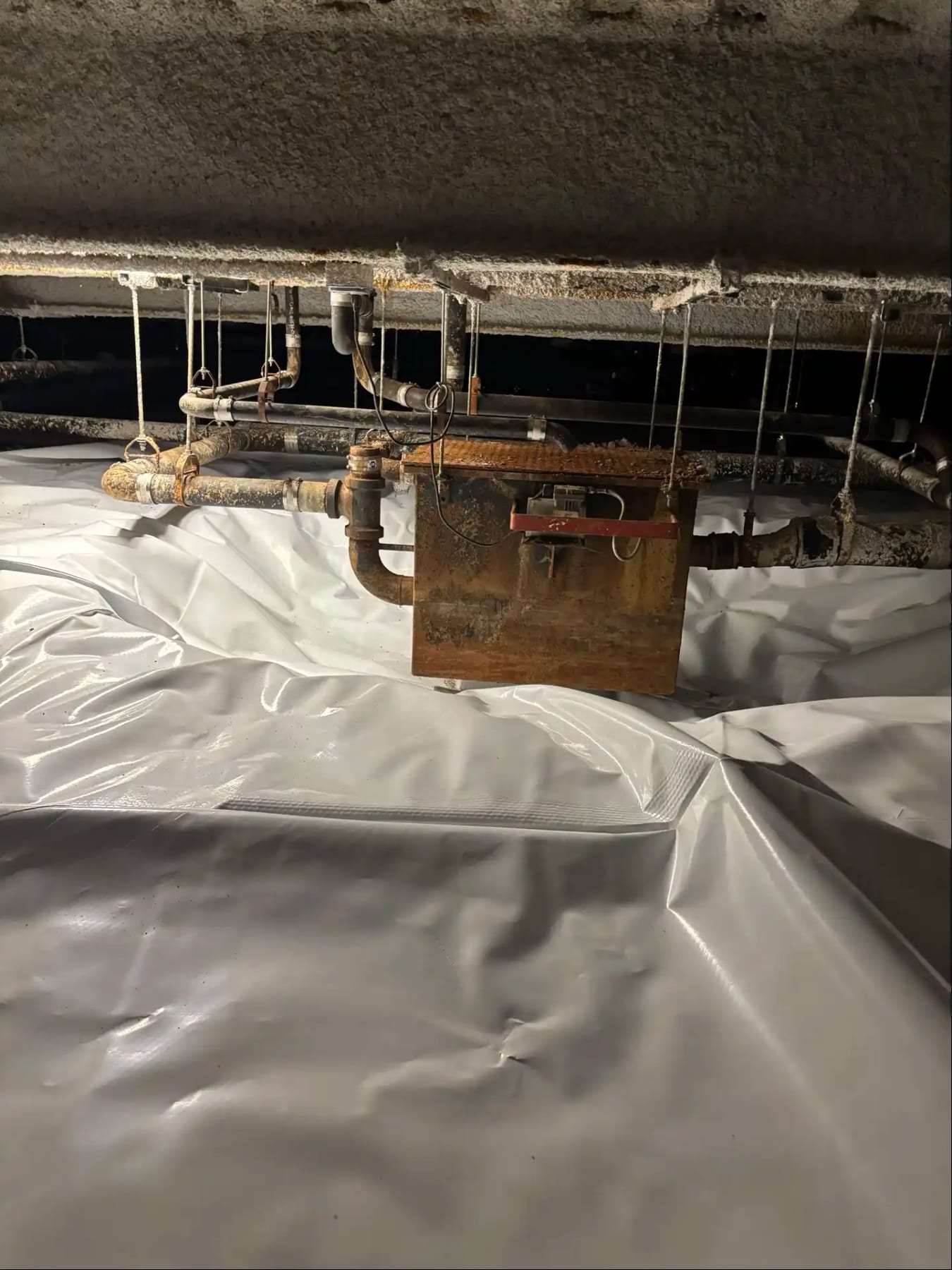
Crawlspace with a vapor barrier below rusted pipes and a hanging box. Included to show the kind of work involved, not a property or job connected to this site.
How the humidity builds
A dryer pushes air that carries moisture from wet clothing. Through a properly connected vent, that air leaves the house. If a joint has separated, the duct is crushed or crosses a tight spot, some of that air spills into the basement. Over many loads it raises the humidity near the ceiling, in the joists and on cold concrete.
Basement laundry areas also often lack exhaust fans, so steam from washing and drying hangs in the room. In a house that already has a damp wall or clay-driven moisture, dryer humidity can tip the room into a persistent musty smell.
You can test it by reading humidity before, during and after a dryer cycle. A rise that does not fall afterward points to a leak or lack of ventilation.
Look at the duct from the dryer to the outside. Long runs, sagging sections and crushed bends hold lint and moisture, and a dryer that takes longer than it used to is often a sign.
Seasonal changes matter. In winter, warm moist air meeting cold basement surfaces can condense, and the smell follows the moisture.
Check the outside hood as well. A flap stuck open or shut, or a screen packed with lint, can send moist air back into the house.
A check you can do
Look along the whole duct
Check for gaps, loose tape, crushed sections and a flexible duct sagging across the ceiling.
Feel for air at the outdoor hood
Weak flow suggests blockage or a long run.
Clean lint
Lint on the dryer, screen and duct raises safety and moisture issues.
Read humidity
Place a hygrometer in the room and run a cycle, noting the change.
Common questions
Is a ventless dryer different?
Yes. It handles moisture differently, and the room may still need ventilation. Check the maker's instructions.
How often should the vent be cleaned?
Check it whenever drying times grow longer, and clean it at least once a year, or as the dryer maker advises.
General information for Hilltop, not a quote or professional advice. In an emergency, call 911.