What a sump pit does and why it can smell
A sump pit collects groundwater from drain tile around or under the foundation and a pump lifts it out when the level rises. Many east Denver homes with deep basements have one, and rebuilt homes almost always do. In a semi-arid climate, though, the pump may run only after heavy spring storms or snowmelt, leaving the pit with standing water the rest of the year.
Standing water collects organic matter, soil, and sometimes laundry or dehumidifier discharge that was routed into the pit. Bacteria break that material down and the result can smell swampy, musty or faintly sulfurous. Because the pit connects to drain tile around the house, it can also carry soil gases, including radon, which is why many pits in Colorado have sealed lids tied into a mitigation system.
A sump pit should be clear groundwater only. If it holds sewage, grease or toilet paper, it is not acting as a sump, and a plumber should find out why.
Checking the pit safely
Unplug the pump before reaching near it, and never put hands in the water while the pump is energized.
Find the lid type
A loose plastic lid, a bolted clear lid with a gasket, or no lid at all. A sealed lid with a pipe coming out of it may be part of a radon system; do not leave it open longer than needed.
Look and sniff
Note the water level, color and smell. Clear water with a faint earthy smell is different from cloudy water with a rotten-egg odor or a greasy film.
Test the pump
With power restored, slowly pour a bucket of clean water in until the float lifts. Confirm the pump turns on, empties the pit and shuts off, and that the discharge line outside isn't blocked.
Check the check valve
If water runs back into the pit after the pump stops, the check valve may have failed. That water stagnates and smells.
Close it up properly
Reseat the lid and gasket, and seal any gaps around pipes and cords with a product rated for the purpose.
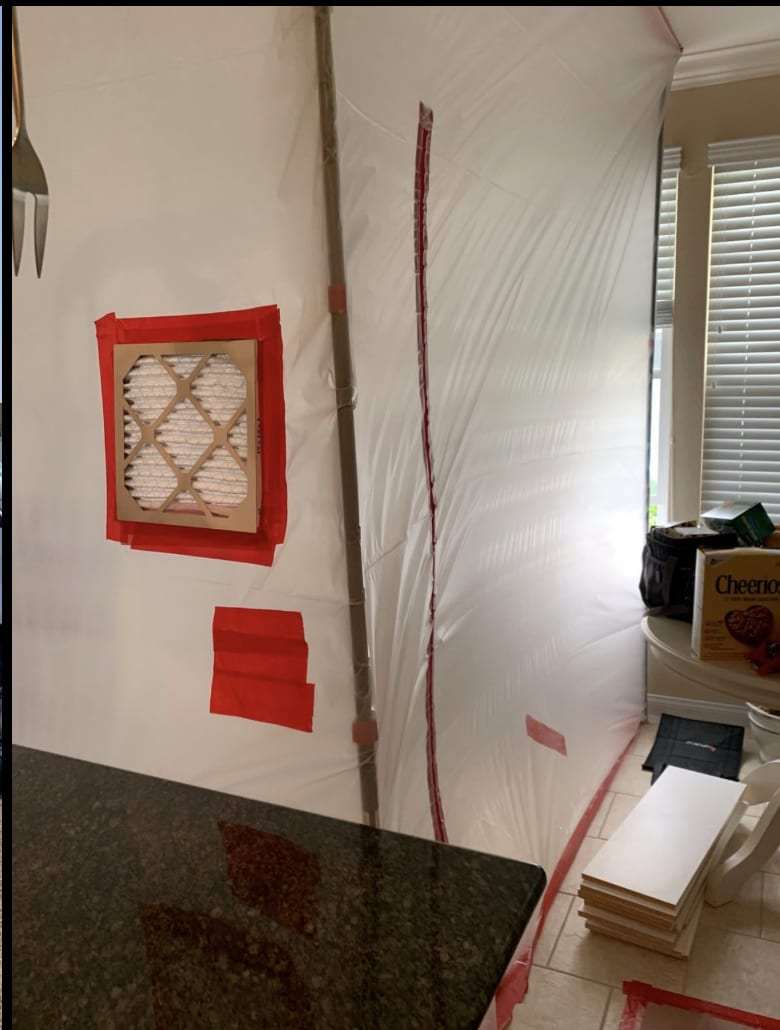
Plastic containment wall with a filter port for negative air. A general example of this kind of work, not a photo of a particular home, business or job.
What the pit's condition suggests
| What you find | Likely meaning | Next step |
|---|---|---|
| Dry pit, musty smell nearby | Pit is not the source; look at walls and stored items | Move on to moisture readings |
| Stale water, unsealed lid | Stagnant water venting into the room | Refresh water, clean silt, seal the lid |
| Sulfur smell, black sludge | Bacterial activity in organic buildup | Clean the pit; ask a plumber about routing |
| Sewage or grease in the pit | A drain is connected or leaking into it | Call a plumber; do not clean it yourself |
| Water running back after each cycle | Failed check valve | Replace the valve |
| Pump runs often in dry weather | Possible leak, irrigation, or high groundwater | Track timing and call a waterproofing contractor |
General information for Hilltop, not a quote or professional advice. In an emergency, call 911.